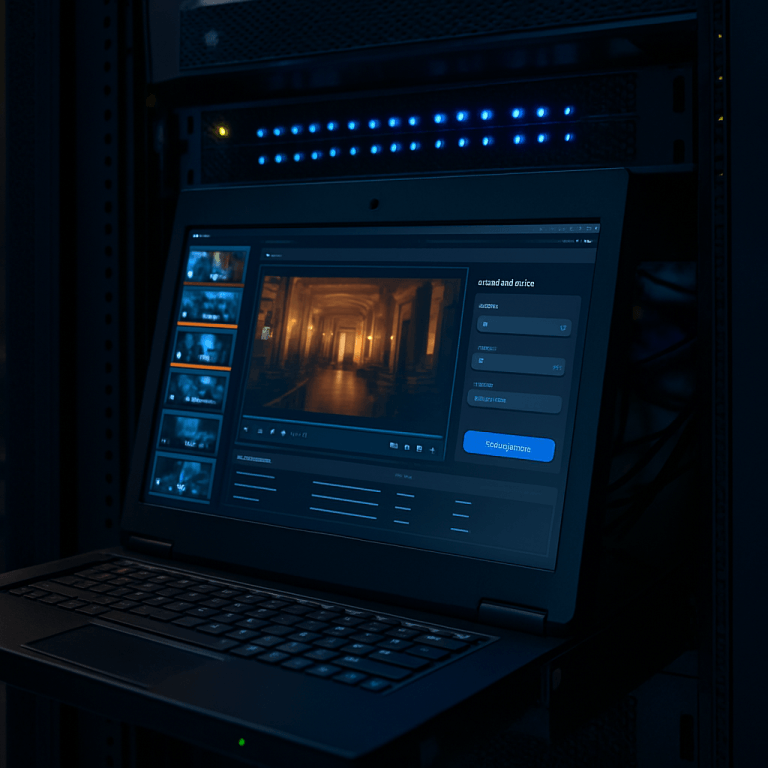

A 24/7 RTMP TV channel is not just a long live stream. It is a system that must survive restarts, network interruptions, and encoder failures without human intervention.
What makes 24/7 streaming different?
Continuous broadcasting demands automation. Playlists, fallback content, and scheduled live inserts are essential.
Servers must handle memory leaks, disk usage, and process restarts gracefully.
Infrastructure considerations
24/7 channels benefit from:
- Dedicated or semi-dedicated servers
- Monitoring and alerting
- Automatic encoder reconnection
- Stable storage for media libraries
Ignoring these aspects often leads to silent failures that go unnoticed for hours.
The long-term view
Once stable, 24/7 RTMP TV channels become powerful tools for branding, education, or niche entertainment. Reliability, not novelty, determines success.
Redundancy and Failover Architectures
The hallmark of a truly professional 24/7 channel is redundancy. High-stakes broadcasters often employ a “primary and backup” ingest strategy. This involves two independent encoders sending RTMP streams to a server configured with an automatic failover switch. If the primary feed drops due to a local ISP failure or hardware glitch, the server seamlessly switches to the backup source within milliseconds. By utilizing “heartbeat” monitoring, these systems ensure that the stream output remains active, preventing the dreaded “blank screen” that can cause viewers to drop off and algorithms to penalize the channel’s ranking.
Monetization and Content Lifecycle
Beyond the technical challenges, a 24/7 RTMP channel transforms how content is monetized. Unlike a one-off live event, a continuous stream provides a constant “surface area” for Server-Side Ad Insertion (SSAI) and brand partnerships. By integrating a playout system that can inject scheduled advertisements or promotional segments directly into the RTMP feed, broadcasters can generate passive revenue around the clock. This creates a sustainable lifecycle for archival content; yesterday’s live recordings become today’s scheduled programming, ensuring that the dedicated server infrastructure isn’t just a cost center, but a consistent revenue-generating asset.
The Complete Article Overview
You now have a comprehensive guide that covers the entire spectrum of professional streaming:
- Foundations: The choice between shared and dedicated RTMP servers.
- Growth: Transitioning from testing to professional-grade environments.
- Security: Protecting data and managing hybrid distributions.
- Optimization: Managing bitrates, buffers, and system health.
- Continuity: Building 24/7 automated TV channels that survive the “long haul.”
About the Author